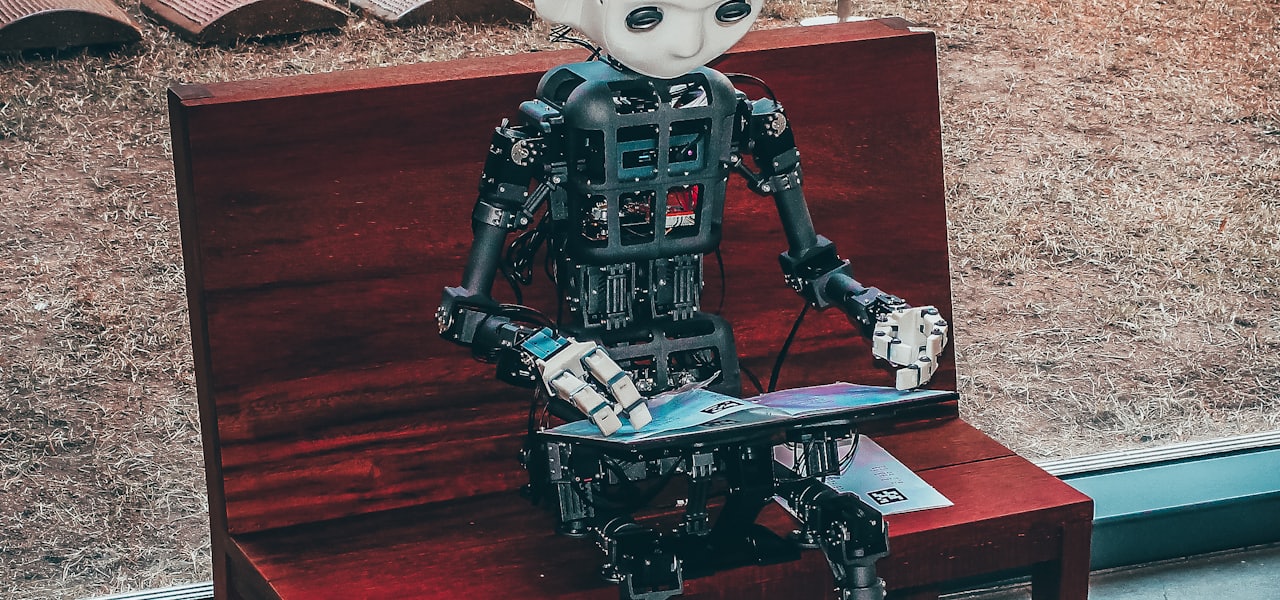
AI Image Generators

Explore the best AI Image Generators — independent reviews, comparisons, pricing and step-by-step how-to guides, curated by Aizhi.

  • Neural radiance field

    Neural radiance field

    A neural radiance field (NeRF) is a neural field for reconstructing a three-dimensional representation of a scene from two-dimensional images. The NeRF model enables downstream applications of novel view synthesis, scene geometry reconstruction, and obtaining the reflectance properties of the scene. Additional scene properties such as camera poses may also be jointly learned. First introduced in 2020, it has since gained significant attention for its potential applications in computer graphics and content creation. == Algorithm == The NeRF algorithm represents a scene as a radiance field parametrized by a deep neural network (DNN). The network predicts a volume density and view-dependent emitted radiance given the spatial location ( x , y , z ) {\displaystyle (x,y,z)} and viewing direction in Euler angles ( θ , Φ ) {\displaystyle (\theta ,\Phi )} of the camera. By sampling many points along camera rays, traditional volume rendering techniques can produce an image. === Data collection === A NeRF needs to be retrained for each unique scene. The first step is to collect images of the scene from different angles and their respective camera pose. These images are standard 2D images and do not require a specialized camera or software. Any camera is able to generate datasets, provided the settings and capture method meet the requirements for SfM (Structure from Motion). This requires tracking of the camera position and orientation, often through some combination of SLAM, GPS, or inertial estimation. Researchers often use synthetic data to evaluate NeRF and related techniques. For such data, images (rendered through traditional non-learned methods) and respective camera poses are reproducible and error-free. === Training === For each sparse viewpoint (image and camera pose) provided, camera rays are marched through the scene, generating a set of 3D points with a given radiance direction (into the camera). For these points, volume density and emitted radiance are predicted using the multi-layer perceptron (MLP). An image is then generated through classical volume rendering. Because this process is fully differentiable, the error between the predicted image and the original image can be minimized with gradient descent over multiple viewpoints, encouraging the MLP to develop a coherent model of the scene. == Variations and improvements == Early versions of NeRF were slow to optimize and required that all input views were taken with the same camera in the same lighting conditions. These performed best when limited to orbiting around individual objects, such as a drum set, plants or small toys. Since the original paper in 2020, many improvements have been made to the NeRF algorithm, with variations for special use cases. === Fourier feature mapping === In 2020, shortly after the release of NeRF, the addition of Fourier Feature Mapping improved training speed and image accuracy. Deep neural networks struggle to learn high frequency functions in low dimensional domains; a phenomenon known as spectral bias. To overcome this shortcoming, points are mapped to a higher dimensional feature space before being fed into the MLP. γ ( v ) = [ a 1 cos ⁡ ( 2 π B 1 T v ) a 1 sin ⁡ ( 2 π B 1 T v ) ⋮ a m cos ⁡ ( 2 π B m T v ) a m sin ⁡ ( 2 π B m T v ) ] {\displaystyle \gamma (\mathrm {v} )={\begin{bmatrix}a_{1}\cos(2{\pi }{\mathrm {B} }_{1}^{T}\mathrm {v} )\\a_{1}\sin(2\pi {\mathrm {B} }_{1}^{T}\mathrm {v} )\\\vdots \\a_{m}\cos(2{\pi }{\mathrm {B} }_{m}^{T}\mathrm {v} )\\a_{m}\sin(2{\pi }{\mathrm {B} }_{m}^{T}\mathrm {v} )\end{bmatrix}}} Where v {\displaystyle \mathrm {v} } is the input point, B i {\displaystyle \mathrm {B} _{i}} are the frequency vectors, and a i {\displaystyle a_{i}} are coefficients. This allows for rapid convergence to high frequency functions, such as pixels in a detailed image. === Bundle-adjusting neural radiance fields === One limitation of NeRFs is the requirement of knowing accurate camera poses to train the model. Often times, pose estimation methods are not completely accurate, nor is the camera pose even possible to know. These imperfections result in artifacts and suboptimal convergence. So, a method was developed to optimize the camera pose along with the volumetric function itself. Called Bundle-Adjusting Neural Radiance Field (BARF), the technique uses a dynamic low-pass filter (DLPF) to go from coarse to fine adjustment, minimizing error by finding the geometric transformation to the desired image. This corrects imperfect camera poses and greatly improves the quality of NeRF renders. === Multiscale representation === Conventional NeRFs struggle to represent detail at all viewing distances, producing blurry images up close and overly aliased images from distant views. In 2021, researchers introduced a technique to improve the sharpness of details at different viewing scales known as mip-NeRF (comes from mipmap). Rather than sampling a single ray per pixel, the technique fits a gaussian to the conical frustum cast by the camera. This improvement effectively anti-aliases across all viewing scales. mip-NeRF also reduces overall image error and is faster to converge at about half the size of ray-based NeRF. === Learned initializations === In 2021, researchers applied meta-learning to assign initial weights to the MLP. This rapidly speeds up convergence by effectively giving the network a head start in gradient descent. Meta-learning also allowed the MLP to learn an underlying representation of certain scene types. For example, given a dataset of famous tourist landmarks, an initialized NeRF could partially reconstruct a scene given one image. === NeRF in the wild === Conventional NeRFs are vulnerable to slight variations in input images (objects, lighting) often resulting in ghosting and artifacts. As a result, NeRFs struggle to represent dynamic scenes, such as bustling city streets with changes in lighting and dynamic objects. In 2021, researchers at Google developed a new method for accounting for these variations, named NeRF in the Wild (NeRF-W). This method splits the neural network (MLP) into three separate models. The main MLP is retained to encode the static volumetric radiance. However, it operates in sequence with a separate MLP for appearance embedding (changes in lighting, camera properties) and an MLP for transient embedding (changes in scene objects). This allows the NeRF to be trained on diverse photo collections, such as those taken by mobile phones at different times of day. === Relighting === In 2021, researchers added more outputs to the MLP at the heart of NeRFs. The output now included: volume density, surface normal, material parameters, distance to the first surface intersection (in any direction), and visibility of the external environment in any direction. The inclusion of these new parameters lets the MLP learn material properties, rather than pure radiance values. This facilitates a more complex rendering pipeline, calculating direct and global illumination, specular highlights, and shadows. As a result, the NeRF can render the scene under any lighting conditions with no re-training. === Plenoctrees === Although NeRFs had reached high levels of fidelity, their costly compute time made them useless for many applications requiring real-time rendering, such as VR/AR and interactive content. Introduced in 2021, Plenoctrees (plenoptic octrees) enabled real-time rendering of pre-trained NeRFs through division of the volumetric radiance function into an octree. Rather than assigning a radiance direction into the camera, viewing direction is taken out of the network input and spherical radiance is predicted for each region. This makes rendering over 3000x faster than conventional NeRFs. === Sparse Neural Radiance Grid === Similar to Plenoctrees, this method enabled real-time rendering of pretrained NeRFs. To avoid querying the large MLP for each point, this method bakes NeRFs into Sparse Neural Radiance Grids (SNeRG). A SNeRG is a sparse voxel grid containing opacity and color, with learned feature vectors to encode view-dependent information. A lightweight, more efficient MLP is then used to produce view-dependent residuals to modify the color and opacity. To enable this compressive baking, small changes to the NeRF architecture were made, such as running the MLP once per pixel rather than for each point along the ray. These improvements make SNeRG extremely efficient, outperforming Plenoctrees. === Instant NeRFs === In 2022, researchers at Nvidia enabled real-time training of NeRFs through a technique known as Instant Neural Graphics Primitives. An innovative input encoding reduces computation, enabling real-time training of a NeRF, an improvement orders of magnitude above previous methods. The speedup stems from the use of spatial hash functions, which have O ( 1 ) {\displaystyle O(1)} access times, and parallelized architectures which run fast on modern GPUs. == Related techniques == === Plenoxels === Plen

    Read more →
  • Journal of Experimental and Theoretical Artificial Intelligence

    Journal of Experimental and Theoretical Artificial Intelligence

    The Journal of Experimental and Theoretical Artificial Intelligence is a quarterly peer-reviewed scientific journal published by Taylor and Francis. It covers all aspects of artificial intelligence and was established in 1989. The editor-in-chief is Eric Dietrich (Binghamton University), the deputy editors-in-chief are Li Pheng Khoo (School of Mechanical & Aerospace Engineering, Nanyang Technological University) and Antonio Lieto (Department of Computer Science, University of Turin). == Abstracting and indexing == The journal is abstracted and indexed in: According to the Journal Citation Reports, the journal has a 2020/2021 impact factor of 2.340 .

    Read more →
  • AlphaStar (software)

    AlphaStar (software)

    AlphaStar is an artificial intelligence (AI) software developed by DeepMind for playing the video game StarCraft II. It was unveiled to the public by name in January 2019. AlphaStar attained "Grandmaster" status in August 2019, considered a milestone for AI in video games at the time. == Background == Games created for humans are considered to have external validity as benchmarks of progress in artificial intelligence. IBM's chess engine Deep Blue (1997) and DeepMind's AlphaGo (2016) were considered major milestones; some argue that StarCraft would also be a major milestone, due to the game's "real-time play, partial observability, no single dominant strategy, complex rules that make it hard to build a fast forward model, and a particularly large and varied action space." Though difficult, StarCraft may still be tractable with current technology because "its rules are known and the world is discrete with only a few types of objects". StarCraft II is a popular fast-paced online real-time strategy game developed by Blizzard Entertainment. == History == DeepMind Technologies was founded in the UK in 2010. As early as 2011, founder Demis Hassabis called StarCraft "the next step up" after games like Go. DeepMind became a subsidiary of Google in 2014, after demonstrating self-learning bots with superhuman ability at a variety of Atari 2600 games. In February 2015, computer scientist Zachary Mason predicted Deepmind's research "leads to StarCraft in five or ten years". In March 2016, following AlphaGo's victory over Lee Sedol, a world champion Go player, Hassabis publicly mulled building an AI for StarCraft, citing it as a strategic game with incomplete information where, unlike Go, much of the "board" is invisible. A formal collaboration was announced at BlizzCon in November 2016, alongside a plan to release an open development environment for bots in Q1 of 2017. By 2017, DeepMind was experimenting with feeding StarCraft data into its software. In August 2017, DeepMind and Blizzard released development tools to assist in bot development, as well as data from 65,000 historical games. At the time, computer scientist and StarCraft tournament manager David Churchill estimated it would take five years for a bot to beat a human, but made the caveat that AlphaGo had beaten expectations. In Wired, tech journalist Tom Simonite stated "No one expects the robot to win anytime soon. But when it does, it will be a far greater achievement than DeepMind's conquest of Go." In December 2018, DeepMind's bot defeated professional player Grzegorz "MaNa" Komincz, 5-0. DeepMind announced the bot, named "AlphaStar", in January 2019. A journalist at Ars Technica and others argued that AlphaStar still had unfair advantages: "AlphaStar has the ability to make its clicks with surgical precision using an API, whereas human players are constrained by the mechanical limits of computer mice". AlphaStar also had a global view rather than being limited by the in-game camera. Furthermore, while there was a cap on the number of actions over a five-second window, AlphaStar was free to allocate its action quota unevenly across the window in order to launch superhuman bursts of activity at critical moments. DeepMind quickly retrained AlphaStar under more realistic constraints, and then lost a rematch with Komincz. Starting in July 2019, the new, constrained version of AlphaStar anonymously competed against players who "opted in" on the public 1v1 European multiplayer ladder. By the end of August 2019, AlphaStar had attained Grandmaster level, ranking among the top 0.2% of human players. == Algorithms == Unlike AlphaZero, AlphaStar initially learns to imitate the moves of the best players in its database of human vs. human games; this step is necessary to solve what DeepMind's Dave Silver calls "the exploration problem": discovering new strategies would otherwise be like finding a "needle in a haystack". Agents then play each other and deploy deep reinforcement learning. These main agents also learn by playing against suboptimal "exploiter agents" whose purpose is to expose weaknesses in the main agents. == Reactions == After his 5-0 defeat in December 2018, Komincz stated "I wasn't expecting the AI to be that good". Stuart Russell assessed that AlphaStar's 2018 victory required "a fair amount of problem-specific effort" and that general-purpose methods were "not quite ready for StarCraft". An article in Wired UK judged AlphaStar's new constraints, adopted for the July 2019 matches, to be "fair" this time around. StarCraft professional Raza "RazerBlader" Sekha stated AlphaStar was "impressive" but had its quirks, succumbing in one game to an unorthodox army composition made up of only air units. The UK's top player, Joshua "RiSky" Hayward, expressed some disappointment, saying AlphaStar "often didn't make the most efficient, strategic decisions". Professional Diego "Kelazhur" Schwimer called AlphaStar's play "unimaginably unusual; it really makes you question how much of StarCraft's diverse possibilities pro players have really explored". AlphaStar's opponents often did not realize they were playing a bot. Ian Sample, of The Guardian, called AlphaStar a "landmark achievement" for the field of AI. Churchill stated that he had previously seen bots that master one or two elements of StarCraft, but that AlphaStar was the first that can handle the game in its entirety. Gary Marcus expressed his continuing skepticism about deep learning, stating: "So far the field has struggled to take techniques like this out of the laboratory and game environments and into the real world, and I don't immediately see this result as progress in that direction". AI researcher Jon Dodge was surprised by AlphaStar, stating that he did not expect such a "superhuman" performance for "another couple of years"; in contrast, Churchill states "StarCraft is nowhere near being 'solved', and AlphaStar is not yet even close to playing at a world champion level". == Legacy == DeepMind argues that insights from AlphaStar might benefit robots, self-driving cars, and virtual assistants, which need to operate with "imperfectly observed information". Silver has indicated his lab "may rest at this point", rather than try to substantially improve AlphaStar. Silver himself argues that "AlphaStar has become the first AI system to reach the top tier of human performance in any professionally played e-sport on the full unrestricted game under professionally approved conditions... Ever since computers cracked Go, chess, and poker, the game of StarCraft has emerged, essentially by consensus from the community, as the next grand challenge for AI." Computer scientist Noel Sharkey argues, disapprovingly, that "military analysts will certainly be eyeing the successful AlphaStar real-time strategies as a clear example of the advantages of AI for battlefield planning". In contrast, Silver argues: "To say that this has any kind of military use is saying no more than to say an AI for chess could be used to lead to military applications".

    Read more →
  • Model

    Model

    A model is an informative representation of an object, person, or system. The term originally denoted the plans of a building in 16th-century English, and derived via French and Italian ultimately from Latin modulus, 'a measure'. Models can be divided into physical models (e.g. a ship model) and abstract models (e.g. a set of mathematical equations describing the workings of the atmosphere for the purpose of weather forecasting). Abstract or conceptual models are central to philosophy of science. In scholarly research and applied science, a model should not be confused with a theory: while a model seeks only to represent reality with the purpose of better understanding or predicting the world, a theory is more ambitious in that it claims to be an explanation of reality. == Types of model == === Model in specific contexts === As a noun, model has specific meanings in certain fields, derived from its original meaning of "structural design or layout": Model (art), a person posing for an artist, e.g. a 15th-century criminal representing the biblical Judas in Leonardo da Vinci's painting The Last Supper Model (person), a person who serves as a template for others to copy, as in a role model, often in the context of advertising commercial products; e.g. the first fashion model, Marie Vernet Worth in 1853, wife of designer Charles Frederick Worth. Model (product), a particular design of a product as displayed in a catalogue or show room (e.g. Ford Model T, an early car model) Model (organism) a non-human species that is studied to understand biological phenomena in other organisms, e.g. a guinea pig starved of vitamin C to study scurvy, an experiment that would be immoral to conduct on a person Model (mimicry), a species that is mimicked by another species Model (logic), a structure (a set of items, such as natural numbers 1, 2, 3,..., along with mathematical operations such as addition and multiplication, and relations, such as < {\displaystyle <} ) that satisfies a given system of axioms (basic truisms), i.e. that satisfies the statements of a given theory Model (CGI), a mathematical representation of any surface of an object in three dimensions via specialized software Model (MVC), the information-representing internal component of a software, as distinct from its user interface === Physical model === A physical model (most commonly referred to simply as a model but in this context distinguished from a conceptual model) is a smaller or larger physical representation of an object, person or system. The object being modelled may be small (e.g., an atom) or large (e.g., the Solar System) or life-size (e.g., a fashion model displaying clothes for similarly-built potential customers). The geometry of the model and the object it represents are often similar in the sense that one is a rescaling of the other. However, in many cases the similarity is only approximate or even intentionally distorted. Sometimes the distortion is systematic, e.g., a fixed scale horizontally and a larger fixed scale vertically when modelling topography to enhance a region's mountains. An architectural model permits visualization of internal relationships within the structure or external relationships of the structure to the environment. Another use is as a toy. Instrumented physical models are an effective way of investigating fluid flows for engineering design. Physical models are often coupled with computational fluid dynamics models to optimize the design of equipment and processes. This includes external flow such as around buildings, vehicles, people, or hydraulic structures. Wind tunnel and water tunnel testing is often used for these design efforts. Instrumented physical models can also examine internal flows, for the design of ductwork systems, pollution control equipment, food processing machines, and mixing vessels. Transparent flow models are used in this case to observe the detailed flow phenomenon. These models are scaled in terms of both geometry and important forces, for example, using Froude number or Reynolds number scaling (see Similitude). In the pre-computer era, the UK economy was modelled with the hydraulic model MONIAC, to predict for example the effect of tax rises on employment. === Conceptual model === A conceptual model is a theoretical representation of a system, e.g. a set of mathematical equations attempting to describe the workings of the atmosphere for the purpose of weather forecasting. It consists of concepts used to help understand or simulate a subject the model represents. Abstract or conceptual models are central to philosophy of science, as almost every scientific theory effectively embeds some kind of model of the physical or human sphere. In some sense, a physical model "is always the reification of some conceptual model; the conceptual model is conceived ahead as the blueprint of the physical one", which is then constructed as conceived. Thus, the term refers to models that are formed after a conceptualization or generalization process. === Examples === Conceptual model (computer science), an agreed representation of entities and their relationships, to assist in developing software Economic model, a theoretical construct representing economic processes Language model, a probabilistic model of a natural language, used for speech recognition, language generation, and information retrieval Large language models are artificial neural networks used for generative artificial intelligence (AI), e.g. ChatGPT Mathematical model, a description of a system using mathematical concepts and language Statistical model, a mathematical model that usually specifies the relationship between one or more random variables and other non-random variables Model (CGI), a mathematical representation of any surface of an object in three dimensions via specialized software Medical model, a proposed "set of procedures in which all doctors are trained" Mental model, in psychology, an internal representation of external reality Model (logic), a set along with a collection of finitary operations, and relations that are defined on it, satisfying a given collection of axioms Model (MVC), information-representing component of a software, distinct from the user interface (the "view"), both linked by the "controller" component, in the context of the model–view–controller software design Model act, a law drafted centrally to be disseminated and proposed for enactment in multiple independent legislatures Standard model (disambiguation) == Properties of models, according to general model theory == According to Herbert Stachowiak, a model is characterized by at least three properties: 1. Mapping A model always is a model of something—it is an image or representation of some natural or artificial, existing or imagined original, where this original itself could be a model. 2. Reduction In general, a model will not include all attributes that describe the original but only those that appear relevant to the model's creator or user. 3. Pragmatism A model does not relate unambiguously to its original. It is intended to work as a replacement for the original a) for certain subjects (for whom?) b) within a certain time range (when?) c) restricted to certain conceptual or physical actions (what for?). For example, a street map is a model of the actual streets in a city (mapping), showing the course of the streets while leaving out, say, traffic signs and road markings (reduction), made for pedestrians and vehicle drivers for the purpose of finding one's way in the city (pragmatism). Additional properties have been proposed, like extension and distortion as well as validity. The American philosopher Michael Weisberg differentiates between concrete and mathematical models and proposes computer simulations (computational models) as their own class of models. == Uses of models == According to Bruce Edmonds, there are at least 5 general uses for models: Prediction: reliably anticipating unknown data, including data within the domain of the training data (interpolation), and outside the domain (extrapolation) Explanation: establishing plausible chains of causality by proposing mechanisms that can explain patterns seen in data Theoretical exposition: discovering or proposing new hypotheses, or refuting existing hypotheses about the behaviour of the system being modelled Description: representing important aspects of the system being modelled Illustration: communicating an idea or explanation

    Read more →
  • Construction robots

    Construction robots

    Construction robots are a subset of industrial robots used for building and infrastructure construction on site, or in the production of materials and components offsite. A 2021 survey said 55% of construction companies in the United States, Europe, and China used robots in some form. This figure, however, reflects reported use across the construction value chain rather than widespread deployment of robots on active construction sites. Real-world adoption remains limited, with many robotic systems confined to pilot projects, controlled environments, or specific task applications rather than continuous on-site construction use. One of the main challenges in deploying robots on construction sites is the unstructured and variable nature of the environment, which differs fundamentally from controlled factory settings where industrial robots have traditionally operated. Some robots currently deployed on job sites assist with physically demanding or repetitive tasks: excavating, lifting heavy materials, surveying, laying out markers, tying rebar, and installing drywall. More advanced systems are being developed for exterior finishing, steel placement, masonry, and reinforced concrete work. In practice, rather than autonomous systems performing core building tasks, the most widely adopted robot applications on construction sites involve technologies such as aerial drones (or, less frequently, robot 'dogs' - for example, Boston Dynamics' Spot - or humanoid robots) used for surveying, inspection, and progress monitoring (the robots typically carry video and/or 360-degree cameras, LiDar scanners or other data capture devices, with data analysed using artificial intelligence and machine learning). Some emerging systems are designed as multifunctional construction robots, integrating multiple tools and capabilities within a single robotic platform to perform different stages of the construction process. These systems aim to improve operational flexibility and increase automation in complex construction environments. Experimental projects using robotic construction technologies and additive manufacturing have been demonstrated in several countries as part of broader efforts to industrialize the construction sector and improve productivity through automation and digitalization. == Features == Construction robots are generally required to meet the following criteria: Mobility: the ability to navigate around a construction site, including uneven terrain and confined spaces. Adaptability: the ability to handle components of variable size, weight, and shape. Environmental awareness: the ability to sense and respond to changing on-site conditions. Interactivity: the ability to operate alongside human workers and other equipment. Multitasking: the ability to perform several different operations within a single deployment. == Capabilities == Construction robots have been developed and tested for a range of on-site tasks, including: Progress monitoring — robots equipped with cameras and sensors can track construction progress and identify deviations from plans. Inspection — robots are used to investigate infrastructure at dangerous or inaccessible locations, reducing risk to human workers and eliminating human error. Wall construction — robotic systems can lay bricks and blocks with greater speed and consistency than manual labour. Earthmoving and material handling — autonomous excavators and haul trucks use GPS, lidar, and motion sensors to perform digging, trenching, and loading tasks with minimal human input. Grading and dozing — autonomous bulldozers use GPS, gyroscopes, and laser sensors to control blade angle and depth, improving surface finish accuracy and reducing material overuse. 3D printing — additive manufacturing systems can construct walls and structural elements directly from digital models. == Notable construction-related activities undertaken by robots == The distribution of robotic applications in construction varies across the project lifecycle. Most applications are concentrated in structural construction tasks such as masonry, concrete work, and assembly, while other phases, including planning, maintenance, and demolition, remain less represented. === Automated building systems === The Nisseki Yokohama Building (also known as Rail City Yokohama), a 30-storey office building in Yokohama, Japan, was constructed between 1994 and 1997 using the SMART system (Shimizu Manufacturing system by Advanced Robotics Technology), developed by Shimizu Corporation and a consortium of seven other Japanese companies. The system used automated horizontal hoists and vertical lifts to position steel beams, columns, precast concrete floor slabs, and prefabricated facade panels, with welding robots connecting structural elements under laser-guided precision. Each component was tracked by barcode to monitor progress and coordinate just-in-time delivery of materials. Obayashi Corporation developed the Advanced Building Construction System (ABCS), a similar automated platform used in several high-rise projects in Japan in the 1990s, including the NEC Head Office in Kanagawa (1997–2000). === Progress monitoring, inspection === Boston Dynamics' Spot was used in February 2024 to inspect sections of the M5 motorway in England for National Highways. A £15,000 humanoid robot (a G1 model from Chinese manufacturer Unitree) was deployed to capture 360-degree imagery and progress reports to support health and safety monitoring and reporting for UK contractor Tilbury Douglas in April 2026. In the US, Virginia Tech's ARCADE research lab is developing MARIO (Multi-Agent Robotic system for Inspection On-site), a heterogenous robotic system deploying multiple robots capable of different locomotion to perform remote real-time construction progress monitoring in complex construction sites. === Earthmoving === === Concrete works === Obayashi Corporation developed and deployed a robotic system for placing concrete layers in dam construction in Japan. A concrete floor finishing robot was deployed by Kajima and Tokimec in Japan. The MARK series were designed in 1984 to automate the levelling and trowelling of concrete slabs on construction sites, providing consistent finishing accuracy, improved efficiency, and reduced dependence on skilled labour === Masonry === SAM100 (Semi-Automated Mason), developed by Construction Robotics, is one of the first commercially available bricklaying robots for on-site masonry construction. In 2018, it was used in the construction of the University Arts Building at the University of Nevada, Reno — a $35.5 million facility — where it laid over 60,000 of the 100,000 bricks required, reducing the brick veneer installation time by approximately 50%. Hadrian X, developed by the Australian company Fastbrick Robotics, is a fully autonomous mobile bricklaying robot. In November 2022, it completed its first commercial project — five four-bedroom houses in Wellard, Western Australia. In February 2025, PulteGroup, one of the largest homebuilders in the United States, piloted Hadrian X on a site in Florida, constructing an entire house in a single day. === 3D printing === In May 2025, a residential building in Arinaga, Gran Canaria, Spain, was completed using 3D printing construction technology, as part of broader efforts to demonstrate robotic and additive manufacturing methods in the housing sector. In 2026, a three-storey apartment block in France was constructed using concrete 3D printing technology, three months faster than conventional building methods. Finland's Hyperion Robotics has opened a UK factory and used 3D printing with concrete to produce foundations for pipelines and for electricity substation bases, reducing time-consuming and weather-dependent onsite construction processes. == Social impact == The adoption of construction robots varies significantly by region and is shaped by labour market conditions, cultural attitudes, and regulatory frameworks. In Japan, construction robots have been embraced as a response to an ageing workforce and chronic labour shortages, and are generally viewed positively by the industry. In the United States, adoption has historically been slower, partly due to resistance from labour unions concerned about job displacement. Research suggests that the impact of automation on workers is uneven: while robots can create a productivity effect that benefits some workers, displacement effects are most pronounced among younger, less-educated workers in manufacturing-heavy regions. More than 60% of construction firms now report difficulty finding skilled operators, which has increased openness to automation as a practical solution to workforce shortages rather than a replacement for workers. In the UK, during onsite deployment of a humanoid robot for monitoring purposes, there were concerns that staff might think they were being watched ("It's not there to spy on people.... So, we insist that everyone is blurred out. N

    Read more →
  • ELVIS Act

    ELVIS Act

    The ELVIS Act or Ensuring Likeness Voice and Image Security Act, signed into law by Tennessee Governor Bill Lee on March 21, 2024, marked a significant milestone in the area of regulation of artificial intelligence and public sector policies for artists in the era of artificial intelligence (AI) and AI alignment. It was noted as the first enacted legislation in the United States specifically designed to protect musicians from the unauthorized use of their voices through artificial intelligence technologies and against audio deepfakes and voice cloning. This legislation distinguishes itself by adding penalties for copying a performer's voice. == Origin and advocacy == The inception of the ELVIS Act has been attributed to Gebre Waddell, founder of Sound Credit, who initially conceptualized a framework in 2023 that later evolved into the legislation. Representative Justin J. Pearson acknowledged Waddell's pivotal role during the March 4 House Floor Session on the bill. Leading Tennessee musicians supported the ELVIS Act. Tennessee Governor Bill Lee endorsed it as a Governor's Bill, and it was introduced in the Tennessee Legislature as House Bill 2091 by William Lamberth (R-44) and Senate Bill 2096 by Jack Johnson (R-27). The ELVIS Act is an amendment to a 1984 law that was the result of the Elvis Presley estate litigation for controlling how his likeness could be used after death. == Lobbying from the recording industry == The legislative journey of the ELVIS Act included a broad coalition of music industry stakeholders, including: These organizations, led by the Recording Academy and the RIAA, played roles in drafting the legislation, advocating for passage, and rallying support among the industry and legislators. The act gained momentum through discussions that bridged industry concerns with legislative action. This collaborative process led to a proposal that specifically targets the use of AI to create unauthorized reproductions of artists' voices and images. == Opposition == The ELVIS Act saw industry opposition from the Motion Picture Association, including testimony in the House Banking & Consumer Affairs Subcommittee, including remarks that the law risks "interference with our members’ ability to portray real people and events." TechNet, representing companies such as OpenAI, Google and Amazon, expressed their opposition in the hearing to the bill as drafted, asserting that the language was too broadly written and could have unintended consequences. Other concerns included its potential application to cover bands, but lawmakers assured people that this was not the intention. The bill passed the Tennessee House and Senate with a unanimous, bi-partisan vote including 93 ayes and 0 Noes in the House, and 30 ayes and 0 noes in the Senate. == Passage == By explicitly addressing AI impersonation, the ELVIS Act originated a legal approach to safeguarding personal rights, in the context of digital and technological advancements. It extends protections to an artist's voice and likeness, areas vulnerable to exploitation with the proliferation of AI technologies that occurred in 2023. The legislation received widespread support from the music industry, signaling a significant step forward in the ongoing effort to balance innovation with the protection of individual rights and creative integrity. It was reported as underscoring Tennessee's commitment to its musical heritage and showed the state as a leader in adapting copyright and privacy protections to the modern technological landscape. Artists including Chris Janson and Luke Bryan appeared at the signing ceremony hosted at Robert's Western World to support the new law and commemorate its passing. == Legal precedent == The ELVIS Act was reported as representing a development in the discourse surrounding AI, intellectual property, and personal rights. It was hoped by proponents to set a precedent for future legislative efforts both within and beyond Tennessee, offering a model for how states and potentially the federal government could address similar challenges. As AI technology continues to evolve, the act represents a foundational framework for protecting the authenticity and rights of artists, ensuring contributions remain protected. The act prohibits usage of AI to clone the voice of an artist without consent and can be criminally enforced as a Class A misdemeanor. This legislation's success was hoped by its supporters to inspire similar actions in other states, contributing to a unified approach to copyright and privacy in the digital age. Such a national response would reinforce the importance of safeguarding artists' rights against unauthorized use of their voices and likenesses.

    Read more →
  • Ballie

    Ballie

    Ballie is an AI robot created by Samsung to be released in 2026. It is an autonomous robot which has the ability to control smart home devices. Ballie can text, send pictures and follow commands through SmartThings. It can also show workout information shared from a Galaxy Watch. Ballie can make video calls and welcome you home. == History == It was first unveiled at Samsung's CES event in CES 2020, and later updated the design in CES 2024, and will be later released in 2026. == Design ==

    Read more →
  • Dendral

    Dendral

    Dendral was a project in artificial intelligence (AI) of the 1960s, and the computer software expert system that it produced. Its primary aim was to study hypothesis formation and discovery in science. For that, a specific task in science was chosen: help organic chemists in identifying unknown organic molecules, by analyzing their mass spectra and using knowledge of chemistry. It was done at Stanford University by Edward Feigenbaum, Bruce G. Buchanan, Joshua Lederberg, and Carl Djerassi, along with a team of highly creative research associates and students. It began in 1964 and spans approximately half the history of AI research. The software program Dendral is considered the first expert system because it automated the decision-making process and problem-solving behavior of organic chemists. The project consisted of research on two main programs Heuristic Dendral and Meta-Dendral, and several sub-programs. It was written in the Lisp programming language, which was considered the language of AI because of its flexibility. Many systems were derived from Dendral, including MYCIN, MOLGEN, PROSPECTOR, XCON, and STEAMER. There are many other programs today for solving the mass spectrometry inverse problem, see List of mass spectrometry software, but they are no longer described as 'artificial intelligence', just as structure searchers. The name Dendral is an acronym of the term "Dendritic Algorithm". == Heuristic Dendral == Heuristic Dendral is a program that uses mass spectra or other experimental data together with a knowledge base of chemistry to produce a set of possible chemical structures that may be responsible for producing the data. A mass spectrum of a compound is produced by a mass spectrometer, and is used to determine its molecular weight, the sum of the masses of its atomic constituents. For example, the compound water (H2O), has a molecular weight of 18 since hydrogen has a mass of 1.01 and oxygen 16.00, and its mass spectrum has a peak at 18 units. Heuristic Dendral would use this input mass and the knowledge of atomic mass numbers and valence rules, to determine the possible combinations of atomic constituents whose mass would add up to 18. As the weight increases and the molecules become more complex, the number of possible compounds increases drastically. Thus, a program that is able to reduce this number of candidate solutions through the process of hypothesis formation is essential. New graph-theoretic algorithms were invented by Lederberg, Harold Brown, and others that generate all graphs with a specified set of nodes and connection-types (chemical atoms and bonds) -- with or without cycles. Moreover, the team was able to prove mathematically that the generator is complete, in that it produces all graphs with the specified nodes and edges, and that it is non-redundant, in that the output contains no equivalent graphs (e.g., mirror images). The CONGEN program, as it became known, was developed largely by computational chemists Ray Carhart, Jim Nourse, and Dennis Smith. It was useful to chemists as a stand-alone program to generate chemical graphs showing a complete list of structures that satisfy the constraints specified by a user. == Meta-Dendral == Meta-Dendral is a machine learning system that receives the set of possible chemical structures and corresponding mass spectra as input, and proposes a set of rules of mass spectrometry that correlate structural features with processes that produce the mass spectrum. These rules would be fed back to Heuristic Dendral (in the planning and testing programs described below) to test their applicability. Thus, "Heuristic Dendral is a performance system and Meta-Dendral is a learning system". The program is based on two important features: the plan-generate-test paradigm and knowledge engineering. === Plan-generate-test paradigm === The plan-generate-test paradigm is the basic organization of the problem-solving method, and is a common paradigm used by both Heuristic Dendral and Meta-Dendral systems. The generator (later named CONGEN) generates potential solutions for a particular problem, which are then expressed as chemical graphs in Dendral. However, this is feasible only when the number of candidate solutions is minimal. When there are large numbers of possible solutions, Dendral has to find a way to put constraints that rules out large sets of candidate solutions. This is the primary aim of Dendral planner, which is a “hypothesis-formation” program that employs “task-specific knowledge to find constraints for the generator”. Last but not least, the tester analyzes each proposed candidate solution and discards those that fail to fulfill certain criteria. This mechanism of plan-generate-test paradigm is what holds Dendral together. === Knowledge Engineering === The primary aim of knowledge engineering is to attain a productive interaction between the available knowledge base and problem solving techniques. This is possible through development of a procedure in which large amounts of task-specific information is encoded into heuristic programs. Thus, the first essential component of knowledge engineering is a large “knowledge base.” Dendral has specific knowledge about the mass spectrometry technique, a large amount of information that forms the basis of chemistry and graph theory, and information that might be helpful in finding the solution of a particular chemical structure elucidation problem. This “knowledge base” is used both to search for possible chemical structures that match the input data, and to learn new “general rules” that help prune searches. The benefit Dendral provides the end user, even a non-expert, is a minimized set of possible solutions to check manually. == Heuristics == A heuristic is a rule of thumb, an algorithm that does not guarantee a solution, but reduces the number of possible solutions by discarding unlikely and irrelevant solutions. The use of heuristics to solve problems is called "heuristics programming", and was used in Dendral to allow it to replicate in machines the process through which human experts induce the solution to problems via rules of thumb and specific information. Heuristics programming was a major approach and a giant step forward in artificial intelligence, as it allowed scientists to finally automate certain traits of human intelligence. It became prominent among scientists in the late 1940s through George Polya’s book, How to Solve It: A New Aspect of Mathematical Method. As Herbert A. Simon said in The Sciences of the Artificial, "if you take a heuristic conclusion as certain, you may be fooled and disappointed; but if you neglect heuristic conclusions altogether you will make no progress at all." == History == During the mid 20th century, the question "can machines think?" became intriguing and popular among scientists, primarily to add humanistic characteristics to machine behavior. John McCarthy, who was one of the prime researchers of this field, termed this concept of machine intelligence as "artificial intelligence" (AI) during the Dartmouth summer in 1956. AI is usually defined as the capacity of a machine to perform operations that are analogous to human cognitive capabilities. Much research to create AI was done during the 20th century. Also around the mid 20th century, science, especially biology, faced a fast-increasing need to develop a "man-computer symbiosis", to aid scientists in solving problems. For example, the structural analysis of myoglobin, hemoglobin, and other proteins relentlessly needed instrumentation development due to its complexity. In the early 1960s, Joshua Lederberg started working with computers and quickly became tremendously interested in creating interactive computers to help him in his exobiology research. Specifically, he was interested in designing computing systems to help him study alien organic compounds. Lederberg had been heading a team designing instruments for the Mars Viking lander to search for precursor molecules of life in samples of the Mars surface, using a mass spectrometer coupled with a minicomputer. As he was not an expert in either chemistry or computer programming, he collaborated with Stanford chemist Carl Djerassi to help him with chemistry, and Edward Feigenbaum with programming, to automate the process of determining chemical structures from raw mass spectrometry data. Feigenbaum was an expert in programming languages and heuristics, and helped Lederberg design a system that replicated the way Djerassi solved structure elucidation problems. They devised a system called Dendritic Algorithm (Dendral) that was able to generate possible chemical structures corresponding to the mass spectrometry data as an output. Dendral then was still very inaccurate in assessing spectra of ketones, alcohols, and isomers of chemical compounds. Thus, Djerassi "taught" general rules to Dendral that could help eliminate most of the "chemically implausible" structures, and p

    Read more →
  • PCPaint

    PCPaint

    PCPaint was one of the first IBM PC-based mouse-driven GUI paint programs, released in 1984. It followed after Microsoft Doodle, released in 1983 with the Microsoft Mouse version 1 drivers for DOS, and around the same time as Digital Research’s Draw program. It was developed and created by John Bridges and Doug Wolfgram. It was later developed into Pictor Paint. The hardware manufacturer Mouse Systems bundled PCPaint with millions of computer mice that they sold, making PCPaint one of the best-selling DOS-based paint programs of the mid 1980s. == History == In 1983, Doug Wolfgram bought a Microsoft Mouse and decided to write a drawing program for it. They named it “Mouse Draw”. The interface was primitive but the program functioned well. Wolfgram traveled to SoftCon in New Orleans where he demonstrated the program to Mouse Systems. Mouse Systems was developing an optical mouse and they wanted to bundle a painting program so they agreed to publish Mouse Draw. The original program was written entirely in assembly language with primitive graphics routines developed by Wolfgram. John Bridges worked for an educational software company, Classroom Consortia Media, Inc., developing and writing Apple and IBM graphics libraries for CCM's software. Bridges and Wolfgram were friends who had been connected through a bulletin board system developed and run by Wolfgram. The two collaborated cross country via the BBS, Wolfram in California and Bridges in New York. Mouse Systems wanted the paint program to capture the look and feel of MacPaint. John Bridges and Doug Wolfgram started reworking Mouse Draw into what became PCPaint. The program was completely re-written using Bridge's graphics library and the top-level elements were written in C rather than assembly language. Bridges developed the core graphics code for the first version of PCPaint while Wolfgram worked on the user interface and top-level code. Mouse Systems signed an exclusive agreement with Wolfgram's company, Microtex Industries, Inc., to bundle PCPaint with every mouse they sold. They began publishing PCPaint with their mice in 1984. Microsoft responded in 1985 by bundling a competing product, PC Paintbrush, with version 4 of its DOS drivers for the Microsoft Mouse, replacing its in-house Microsoft Doodle program which it published with version 1 of the DOS drivers in mid-1983. Microsoft’s mouse began to outsell Mouse Systems mouse. In November 1985 Microsoft bundled a cut-down version of PC Paintbrush with Windows 1.0 (called Microsoft Paint), later bundling an updated version of PC Paintbrush with Windows 3.0 (as Paintbrush), impacting PCPaint’s marketshare. In early 1987, Mouse Systems decided that PCPaint wasn't helping to sell mice any longer so they discontinued the bundle deal and returned rights to the code to MicroTex Industries, but retained rights to the name, PCPaint. Wolfgram then combined the paint program with a new animation system he was developing (called GRASP) and Paul Mace Software bought publishing rights to the animation system and PCPaint, which was to be renamed Pictor. Bridges again got involved and took over programming responsibilities for GRASP as well as PCPaint while Wolfgram focused on more of the business details. In creating the first version of PCPaint, Doug had a dual-floppy machine with a Computer Innovations compiler on one disk and source code on the other. John had the "luxury" of a 10MB hard disk in his XT. Data was exchanged daily via 1200, then 2400 baud modems. === Authorship and Ownership === John Bridges and Wolfgram continued to work on PCPaint and GRASP on behalf of Paul Mace Software until 1990. Also in that year, Doug Wolfgram sold his remaining rights to PCPaint (and its animation system, GRASP) to John Bridges. In 1994, GRASP development stopped and so did development of Pictor Paint. John Bridges terminated his GRASP publishing contract with Paul Mace Software, and went off to create GLPro (the next generation of GRASP) with GMEDIA. Along with GLPro, came GLPaint, the successor to PCPaint and Pictor Paint. == Versions == In June 1984, Mouse Systems shipped PCPaint 1.0, the first GUI based Paint program for the IBM PC family of computers. John Bridges and Doug Wolfgram, were the co-authors of PCPaint 1.0. PCPaint 1.0 saved its graphics in a modified BSaved image format with the extension of ".PIC". The release of PCPaint Version 1.5 followed in late 1984, with the additions of graphics image compression for the .PIC format and support for "larger-than-screen" images. PCjr support was also added in this version after overcoming severe memory shortage problems getting PCPaint to run on the 128k PCjr. October 1985 saw the release of PCPaint 2.0. EGA support and publishing features were added to this version. The .PIC format was further refined, offering support for the rapidly expanding graphics capabilities of the PC and efficient image compression. PCPaint 3.1 was released in 1989. Unlike previous versions, it was not bundled with mice but was sold as a stand-alone software product. PCPaint 3.1 offered improved text and image handling, provided 36 types of flood and fill, worked with VGA adapters in hi-res 16-color and 256-color modes, allowed the user to save and retrieve files in a variety of intercompatible formats (.PIC, .GIF, .PCX, .IMG), and printed selected portions of images on color or black-and-white dot matrix, ink jet, and laser printers such as PostScript and HP Laser Jet. PCPaint 3.1 is still in use today by some users of DOS emulation programs like DOSBox and available for free download. Pictor Paint was an improved version, written by John Bridges, and bundled with GRASP GRaphical System for Presentation also written by John Bridges. It was also called "The Painter's Easel". GLPaint, released in 1995, was the last in this series of paint programs written by John Bridges. By 1998 version 7.0 provided support for TrueColor images and the Pictor PIC format was expanded to handle these. == Pictor PIC Image Format == PCPaint 1.0 saved its graphics in a modified BSAVE image format (which was popular at the time) with the file type (extension) of ".PIC". By PCPaint 1.5 this format was extended further to accommodate image compression. With the release of version 2.0 the PICtor PIC image format was developed almost to its present state, with no similarity to the BSAVE format used by earlier versions. Pictor Paint saved its files in a compressed format with the file extension PIC, which was the same format used by PCPaint.

    Read more →
  • Learning Applied to Ground Vehicles

    Learning Applied to Ground Vehicles

    The Learning Applied to Ground Vehicles (LAGR) program, which ran from 2004 until 2008, had the goal of accelerating progress in autonomous, perception-based, off-road navigation in robotic unmanned ground vehicles (UGVs). LAGR was funded by DARPA, a research agency of the United States Department of Defense. == History and background == While mobile robots had been in existence since the 1960s, (e.g. Shakey), progress in creating robots that could navigate on their own, outdoors, off-road, on irregular, obstacle-rich terrain had been slow. In fact, no clear metrics were in place to measure progress. A baseline understanding of off-road capabilities began to emerge with the DARPA PerceptOR program in which independent research teams fielded robotic vehicles in unrehearsed Government tests that measured average speed and number of required operator interventions over a fixed course over widely spaced waypoints. These tests exposed the extreme challenges of off-road navigation. While the PerceptOR vehicles were equipped with sensors and algorithms that were state-of-the-art for the beginning of the 21st century, the limited range of their perception technology caused them to become trapped in natural cul-de-sacs. Furthermore, their reliance on pre-scripted behaviors did not allow them to adapt to unexpected circumstances. The overall result was that except for essentially open terrain with minimal obstacles, or along dirt roads, the PerceptOR vehicles were unable navigate without numerous, repeated operator intervention. The LAGR program was designed to build on the methodology started in PerceptOR while seeking to overcome the technical challenges exposed by the PerceptOR tests. == LAGR goals == The principal goal of LAGR was to accelerate progress in off navigation of UGVs. Additional, synergistic goals included (1) establishing benchmarking methodology for measuring progress for autonomous robots operating in unstructured environments, (2) advancing machine vision and thus enabling long-range perception, and (3) increasing the number of institutions and individuals who were able to contribute to forefront UGV research. == Structure and rationale of the LAGR program == The LAGR program was designed to focus on developing new science for robot perception and control rather than on new hardware. Thus, it was decided to create a fleet of identical, relatively simple robots that would be supplied to the LAGR researchers, who were members of competitive teams, freeing them to concentrate on algorithm development. The teams were each given two robots of the standard design. They developed new software on these robots, and then sent the code to a government test team that then tested that code on Government robots at various test courses. These courses were located throughout the US and were not previously known to the teams. In this way, the code from all teams could be tested in essentially identical circumstances. After an initial startup period, the code development/test cycle was repeated about once every month. The standard robot was designed and built by the Carnegie Mellon University National Robotics Engineering Center (CMU NREC). The vehicles’ computers were preloaded with a modular “Baseline” perception and navigation system that was essentially the same system that CMU NREC had created for the PerceptOR program and was considered to represent the state-of-the-art at the inception of LAGR. The modular nature of the Baseline system allowed the researchers to replace parts of the Baseline code with their own modules and still have a complete working system without having to create an entire navigation system from scratch. Thus, for example, they were able to compare the performance of their own obstacle detection module with that of the Baseline code, while holding everything else fixed. The Baseline code also served as a fixed reference – in any environment and at any time in the program, teams’ code could be compared to the Baseline code. This rapid cycle gave the Government team and the performer teams quick feedback and allowed the Government team to design test courses that challenged the performers in specific perception tasks and whose difficulty was likely to challenge, but not overwhelm, the performers’ current capabilities. Teams were not required to submit new code for every test, but usually did. Despite this leeway, some teams found the rapid test cycle distracting to their long term progress and would have preferred a longer interval between tests. === Phase II === To advance to Phase II, each team had to modify the Baseline code so that on the final 3 tests of Phase I of the government tests, robots running the team's code averaged at least 10% faster than a vehicle running the original Baseline code. This rather modest “Go/ No Go” metric was chosen to allow teams to choose risky, but promising approaches that might not be fully developed in the first 18 months of the program. All 8 teams achieved this metric, with some scoring more twice the speed of the Baseline on the later tests which was the objective for Phase II. Note that the Phase I Go / No Go metric was such that teams were not in completion with each other for a limited number of slots on Phase II: any number of teams, from eight to zero could make the grade. This strategy by DARPA was to designed to encourage cooperation and even code sharing among the teams. == The LAGR teams == Eight teams were selected as performers in Phase I, the first 18 months of LAGR. The teams were from Applied Perception (Principal Investigator [PI] Mark Ollis), Georgia Tech (PI Tucker Balch), Jet Propulsion Laboratory (PI Larry Matthies), Net-Scale Technologies (PI Urs Muller), NIST (PI James Albus), Stanford University (PI Sebastian Thrun), SRI International (PI Robert Bolles), and University of Pennsylvania (PI Daniel Lee). The Stanford team resigned at the end of Phase I to focus its efforts on the DARPA Grand Challenge; it was replaced by a team from the University of Colorado, Boulder (PI Greg Grudic). Also in Phase II, the NIST team suspended its participation in the competition and instead concentrated on assembling the best software elements from each team into a single system. Roger Bostelman became PI of that effort. == The LAGR vehicle == The LAGR vehicle, which was about the size of a supermarket shopping cart, was designed to be simple to control. (A companion DARPA program, Learning Locomotion, addressed complex motor control.) It was battery powered and had two independently driven wheelchair motors in the front, and two caster wheels in the rear. When the front wheels were rotated in the same direction the robot was driven either forward or reverse. When these wheels were driven in opposite directions, the robot turned. The ~ $30,000 cost of the LAGR vehicle meant that a fleet could be built and distributed to a number of teams expanding on the field of researchers who had traditionally participated in DARPA robotics programs. The vehicle's top speed of about 3 miles/ hour and relatively modest weight of ~100 kg meant that it posed a much reduced safety hazard compared to vehicles used in previous programs in unmanned ground vehicles and thus further reduced the budget required for each team to manage its robot. Nevertheless, the LAGR vehicles were sophisticated machines. Their sensor suite included 2 pairs of stereo cameras, an accelerometer, a bumper sensor, wheel encoders, and a GPS. The vehicle also had three computers that were user-programmable. == Scientific results == A cornerstone of the program was incorporation of learned behaviors in the robots. In addition, the program used passive optical systems to accomplish long-range scene analysis. The difficulty of testing UGV navigation in unstructured, off-road environments made accurate, objective measurement of progress a challenging task. While no absolute measure of performance had been defined in LAGR, the relative comparison of a team's code to that of the Baseline code on a given course demonstrated whether progress was being made in that environment. By the conclusion of the program, testing showed that many of the performers had attained leaps in performance. In particular, average autonomous speeds were increased by factor of 3 and useful visual perception was extended to ranges as far as 100 meters. While LAGR did succeed in extending the useful range of visual perception, this was primarily done by either pixel or patch-based color or texture analysis. Object recognition was not directly addressed. Even though the LAGR vehicle had a WAAS GPS, its position was never determined down to the width of the vehicle, so it was hard for the systems to re-use obstacle maps of areas the robots had previously traversed since the GPS continually drifted. The drift was especially severe if there was a forest canopy. A few teams developed visual odometry algorithms that essentially eliminated this drift.

    Read more →
  • Korean Decimal Classification

    Korean Decimal Classification

    The Korean Decimal Classification (KDC) is a system of library classification used in South Korea. The structure and main level classes of the KDC are based on the Dewey Decimal Classification. The KDC is maintained and published by the Classification Committee of the Korean Library Association. The first edition of the classification was published in 1964; the most recent edition is the sixth edition published in 2013. Almost all school and public libraries in South Korea use the KDC to organize their collections, as well as the National Library of Korea and some university libraries. == History == Multiple library classification systems had been developed for Korean libraries before the publication of the KDC. These included the Railway Bureau Library Classification(1920), the Korean Decimal Classification edited by Bong-Suk Park(known as KDCP, 1947), the Han-Un Decimal Classification(1954), and the Kuk-Yeon Decimal Classification(1958). After the disappearance of editor Bong-Suk Park in the 1950s, the KDCP system decreased in use. Korean librarians considered adopting the Dewey Decimal Classification (DDC), especially after it was implemented at Yonsei University in 1957, but struggled to apply it to East Asian and Korean-focused works in their collections. In February 1963, members of the Korean Library Association's Classification were appointed to create a national classification; they decided to make revisions to the order of the main classes of the DDC, for example bringing together the class Language(700) together with the class for Literature(800). Committee members prepared draft classes and indexes and the first edition of the KDC was published in May 1964. Both the text and the index were written in Korean Hangul characters and Chinese characters. The second edition was published just two years later, in 1966, correcting errors and omissions found in the first edition. The third edition was published in 1980, maintaining the basic framework of the previous editions while expanding significantly. The fourth edition, published in 1996, made considerable changes, including increasing the number of representatives on the Classification Committee. The committee sought feedback from the library community and implemented revisions included in the recently published edition 20 of the DDC and edition 9 of the Nippon Decimal Classification. New policies applied to the fourth edition included principles suggesting the main classes should remain as static as possible, with focus shown to expanding classes devoted to technology and science. Likewise, many subject specialists were consulted for the publication of the fifth edition in 2009. The publication of the 23rd edition of the DDC in 2011 provided opportunity for a new revision of the KDC, and the sixth edition was published in July 2013. Greater numbers of classes provided number building capacity in the sixth edition, allowing for more specificity. == Description == The KDC classifies resources primarily by discipline, though some classes are collocated by subject. There are eight auxiliary mnemonic tables used to expand class numbers. The main classes of the KDC are the same as the main classes of the Dewey Decimal Classification, but four of those main classes are in a different order: Natural sciences (400), Technology and engineering (500), Arts (600), and Language 700. Though the structure is heavily influenced by the DDC, aspects of multiple library classifications have been invoked in the creation of the KDC, including the Library of Congress Classification for the arrangement of the social sciences (300), the Universal Decimal Classification for medical sciences (510), the KDCP for Korean and Oriental subjects, the Nippon Decimal Classification for those of Japan and Oriental subjects. === Classes of the KDC 6th edition === 000 General works 000 General works 010 Books, Bibliography 020 Library & information science 030 General encyclopedias 040 General collected essays 050 General serial publications 060 General societies 070 Newspapers, journalism 080 General collected works 090 Materials of province 100 Philosophy 100 Philosophy 110 Metaphysics 120 Epistemology, etc. 130 Systems of philosophy 140 Chinese classics 150 Oriental philosophy and thought 160 Western philosophy 170 Logic 180 Psychology 190 Ethics, moral philosophy 200 Religion 200 Religion 210 Comparative religion 220 Buddhism 230 Christian religion 240 Taoism 250 Chondoism 260 [Unassigned] 270 Hinduism, Brahmanism 280 Islam, Mohammedianism 290 Other religions 300 Social sciences 300 Social sciences 310 Statistics 320 Economics 330 Sociology and social problems 340 Political sciences 350 Public administration 360 Law 370 Education 380 Customs, Etiquette, Folklore 390 Military science 400 Natural sciences 400 Natural sciences 410 Mathematics 420 Physics 430 Chemistry 440 Astronomy 450 Earth science 460 Mineralogy 470 Life science 480 Botany 490 Zoological science 500 Technology 500 Technology 510 Medical science 520 Agriculture 530 Engineering, technology, etc. 540 Construction and architecture 550 Mechanical engineering 560 Electrical, comm. & electric engineering 570 Chemical engineering 580 Manufactures 590 Human ecology 600 Arts 600 Arts 610 [Unassigned] 620 Sculpture, plastic art 630 Crafts 640 Calligraphy 650 Painting, design 660 Photography 670 Music 680 Stage performance, museum arts 690 Amusements, sports & physical training 700 Language 700 Language 710 Korean language 720 Chinese language 730 Japanese & other Asian languages 740 English 750 German 760 French languages 770 Spanish languages & Portuguese language 780 Italian languages 790 Other languages 800 Literature 800 Literature 810 Korean literature 820 Chinese literature 830 Japanese & other Asian literature 840 English & American literature 850 German literature 860 French literature 870 Spanish & Portuguese literature 880 Italian literature 890 Other literatures 900 History 900 History 910 Asia 920 Europe 930 Africa 940 North America 950 South America 960 Oceania and Polar regions 970 [Unassigned] 980 Geography 990 Biography === Expansion tables === Table 1. Standard subdivisions Table 2. Geographic Areas Table 3. Korean geographic areas Table 4. Korean historical period Table 5. Languages Table 6. Subdivisions of individual languages Table 7. Subdivisions of individual literatures Table 8. Subdivisions of individual religions == Usage == KDC is used by a wide range of libraries within Korea, including by the National Library of Korea and most school and public libraries in the country, along with some university libraries, such as the one at Keimyung University.

    Read more →
  • Noam Shazeer

    Noam Shazeer

    Noam Shazeer (born 1975 or 1976) is an American computer scientist and entrepreneur known for his contributions to the field of artificial intelligence and deep learning, particularly in the development of transformer models and natural language processing. He lives in Palo Alto, California. == Career == Noam Shazeer joined Google in 2000. One of his first major achievements was improving the spelling corrector of Google's search engine. In 2017, Shazeer was one of the lead authors of the seminal paper "Attention Is All You Need", which introduced the transformer architecture. At Google, Shazeer and his colleague Daniel de Freitas built a chatbot named Meena. Following the refusal of Google to release the chatbot to the public, Shazeer and Freitas left the company in 2021 to found Character.AI. In September 2023, Time Magazine chose Shazeer as one of the 100 most influential people in the AI world. In August 2024, it was reported that Shazeer would be returning to Google to co-lead the Gemini AI project. Shazeer was appointed as technical lead on Gemini, along with Jeff Dean and Oriol Vinyals. It was part of a $2.7 billion deal for Google to license Character's technology. Since he owns 30-40% of the company, it is estimated he netted $750 million-$1 billion. In 2026, he was elected a member of the National Academy of Engineering. == Views == Shazeer said about artificial general intelligence that he doesn't "particularly care about AGI in the sense of wanting something that can do absolutely everything a person can do”. When asked in 2023 if he is afraid that AGI will destroy the world, he said: "No. Not yet. [...] We’re going to work on it as the technology improves". When asked why do large language models work he answered: "My best guess is divine benevolence [...] Nobody really understands what’s going on. This is a very experimental science [...] It’s more like alchemy or whatever chemistry was in the Middle Ages.” Shazeer has stated, "I do not believe that humans have an attribute called gender... I do not believe that G-d puts people in the wrong bodies. I do not believe that it is okay to sterilize children." == Personal life == Shazeer is an orthodox Jew. His grandparents escaped the Holocaust into the Soviet Union and later lived some time in Israel before emigrating to the USA. His father, Dov Shazeer, was a math teacher who became an engineer and his mother was a homemaker. His sister was ordained as a rabbi by Hebrew College. Shazeer was born in Philadelphia, attended grade school at Cohen Hillel Academy in Marblehead, Massachusetts, and attended Swampscott High School in Swampscott, Massachusetts. He won a gold medal with perfect score at International Mathematical Olympiad 1994 as a member of the USA team. He went on to study math and computer science at Duke University in Durham, North Carolina from 1994 to 1998. At Duke he was a recipient of the Angier B. Duke Memorial Scholarship, and, as part of the Duke math team, won prizes in several math tournaments. He started studying in a graduate program in Berkeley but did not finish it. He is a father of three and is married to Yael Shacham Shazeer

    Read more →
  • Percept (artificial intelligence)

    Percept (artificial intelligence)

    A percept is the input that an intelligent agent is perceiving at any given moment. It is essentially the same concept as a percept in psychology, except that it is being perceived not by the brain but by the agent. A percept is detected by a sensor, often a camera, processed accordingly, and acted upon by an actuator. Each percept is added to a "percept sequence", which is a complete history of each percept ever detected. The agent's action at any instant point may depend on the entire percept sequence up to that particular instant point. An intelligent agent chooses how to act not only based on the current percept, but the percept sequence. The next action is chosen by the agent function, which maps every percept to an action. For example, if a camera were to record a gesture, the agent would process the percepts, calculate the corresponding spatial vectors, examine its percept history, and use the agent program (the application of the agent function) to act accordingly. == Examples == Examples of percepts include inputs from touch sensors, cameras, infrared sensors, sonar, microphones, mice, and keyboards. A percept can also be a higher-level feature of the data, such as lines, depth, objects, faces, or gestures.

    Read more →
  • Attribute–value system

    Attribute–value system

    An attribute–value system is a basic knowledge representation framework comprising a table with columns designating "attributes" (also known as "properties", "predicates", "features", "dimensions", "characteristics", "fields", "headers" or "independent variables" depending on the context) and "rows" designating "objects" (also known as "entities", "instances", "exemplars", "elements", "records" or "dependent variables"). Each table cell therefore designates the value (also known as "state") of a particular attribute of a particular object. == Example of attribute–value system == Below is a sample attribute–value system. It represents 10 objects (rows) and five features (columns). In this example, the table contains only integer values. In general, an attribute–value system may contain any kind of data, numeric or otherwise. An attribute–value system is distinguished from a simple "feature list" representation in that each feature in an attribute–value system may possess a range of values (e.g., feature P1 below, which has domain of {0,1,2}), rather than simply being present or absent (Barsalou & Hale 1993). == Other terms used for "attribute–value system" == Attribute–value systems are pervasive throughout many different literatures, and have been discussed under many different names: Flat data Spreadsheet Attribute–value system (Ziarko & Shan 1996) Information system (Pawlak 1981) Classification system (Ziarko 1998) Knowledge representation system (Wong & Ziarko 1986) Information table (Yao & Yao 2002)

    Read more →
  • Artificial intelligence in Wikimedia projects

    Artificial intelligence in Wikimedia projects

    Some editors of Wikimedia projects use artificial intelligence (AI) and machine learning programs to edit existing articles or create new ones. Some applications of artificial intelligence, like using large language models (LLMs) to create new articles from scratch, have been more controversial than others for the Wikipedia community. In August 2025, English Wikipedia adopted a policy that allowed editors to nominate suspected LLM-generated articles for speedy deletion. This was followed by a March 2026 decision to prohibit the use of LLMs to generate or rewrite article content, with exceptions for copyediting one's own writing and machine translation from another language's Wikipedia. Wikipedia has also been a significant source of training data for some of the earliest artificial intelligence projects. This has received mixed reactions including concern about companies not citing Wikipedia when relying on it to answer a question as well as Wikipedia's increased costs from data scraping. == AI usage == === Earliest use of automated tools, machine learning and AI === Since 2002, bots have been allowed to run on Wikipedia but must be approved and supervised by a human. A bot created in 2002, rambot, transformed census data into short new articles about towns in the United States; the vast majority of town, city, and county articles were started by it. Fighting vandalism has been a major focus of machine learning and AI bots and tools. The 2007 ClueBot relied on simple heuristics to identify likely vandalism, while its 2010 successor, ClueBot NG, uses machine learning through an artificial neural network. Machine translation software has also been used by Wikimedia contributors for a number of years. Aaron Halfaker's Objective Revision Evaluation Service (ORES) project was launched in late 2015 as an artificial intelligence service for grading the quality of Wikipedia edits. === Generative AI and LLMs === In 2022, the public release of ChatGPT inspired more experimentation with AI and writing Wikipedia articles. A debate was sparked about whether and to what extent such large language models are suitable for such purposes in light of their tendency to generate plausible-sounding misinformation, including fake references; to generate prose that is not encyclopedic in tone; and to reproduce biases. An early experiment on December 6, 2022 by a Wikipedia contributor named Pharos occurred when he created the article "Artwork title" using ChatGPT for the initial draft. Another editor who experimented with this early version of ChatGPT said that ChatGPT's overview of "Weaponized incompetence" was decent, but that the citations were fabricated. Since 2023, work has been done to draft an English Wikipedia policy regarding ChatGPT and similar LLMs, at times recommending that users who are unfamiliar with LLMs should avoid using them due to the aforementioned risks, as well as noting the potential for libel or copyright infringement. In early 2023, the Wiki Education Foundation reported that some experienced editors found AI to be useful in starting drafts or creating new articles. It said that ChatGPT "knows" what Wikipedia articles look like and can easily generate one that is written in the style of Wikipedia, but warned that ChatGPT had a tendency to use promotional language, among other issues. In 2023, a ban on AI was deemed "too harsh" by the community given the productivity benefits it offered editors. In 2023, members of the English Wikipedia community created a WikiProject named AI Cleanup to assist in the removal of poor quality AI content from Wikipedia. Miguel García, a former Wikimedia member from Spain, said in 2024 that when ChatGPT was originally launched, the number of AI-generated articles on the site peaked. He added that the rate of AI articles has now stabilized due to the community's efforts to combat it. He said that majority of the articles that have no sources are deleted instantly or are nominated for deletion. In October 2024, a study by Princeton University found that about 5% of 3,000 newly created articles (created in August 2024) on English Wikipedia were created using AI. The study said that some of the AI articles were on innocuous topics and that AI had likely only been used to assist in writing. For some other articles, AI had been used to promote businesses or political interests. In October 2024, Ilyas Lebleu, founder of WikiProject AI Cleanup, said that they and their fellow editors noticed a pattern of unnatural writing that could be connected to ChatGPT. They added that AI is able to mass-produce content that sounds real while being completely fake, leading to the creation of hoax articles on Wikipedia that they were tasked to delete. In June 2025, the Wikimedia Foundation started testing a "Simple Article Summaries" feature which would provide AI-generated summaries of Wikipedia articles, similar to Google Search's AI Overviews. The decision was met with immediate and harsh criticism from some Wikipedia editors, who called the feature a "ghastly idea" and a "PR hype stunt." They criticized a perceived loss of trust in the site due to AI's tendency to hallucinate and questioned the necessity of the feature. The criticism led the Wikimedia Foundation to halt the rollout of Simple Article Summaries that same month while still expressing interest in integrating generative AI more into Wikipedia. The project hints at tensions within the community and with the Foundation over when to use AI.In August 2025, the English Wikipedia community created a policy that allowed users to nominate suspected AI-generated articles for speedy deletion. Editors might recognize AI-generated articles because they use citations that are not related to the subject of the article or fabricated citations or the wording has particular quirks. If an article uses language that reads like an LLM response to a user, such as "Here is your Wikipedia article on" or "Up to my last training update", the article is typically tagged for speedy deletion. Other signs of AI use include excessive use of em dashes, overuse of the word "moreover", promotional material in articles that describes something as "breathtaking" and formatting issues like using curly quotation marks instead of straight versions. During the discussion on implementing the speedy deletion policy, one user, who is an article reviewer, said that he is "flooded non-stop with horrendous drafts" created using AI. Other users said that AI articles have a large amount of "lies and fake references" and that it takes a significant amount of time to fix the issues. English Wikipedia created a guide on how to spot signs of AI-generated writing in August 2025, titled "Signs of AI writing". In January 2026, the Wiki Education Foundation continued to caution against copying and pasting outputs from generative AI into Wikipedia and to avoid it for creating new articles explaining that the text often failed verification with the sources provided. The foundation created a training module that encourages editors to use AI for identifying gaps in articles, finding access to sources and finding relevant sources. In March 2026, the English Wikipedia community prohibited the use of AI to add content to articles, with exceptions for copy editing and machine translation from another language's Wikipedia. The English Wikipedia community holds the position that LLMs often violate core content policies. == Using Wikipedia for artificial intelligence == A 2017 paper described Wikipedia as the mother lode for human-generated text available for machine learning. In the development of the Google's Perspective API that identifies toxic comments in online forums, a dataset containing hundreds of thousands of Wikipedia talk page comments with human-labelled toxicity levels was used. As of 2023, subsets of the Wikipedia corpus were considered one of the largest well-curated data sets available for AI training, used to train every LLM to-date according to Stephen Harrison. This use of Wikipedia was divisive as of 2023. The Wikimedia Foundation and many of its projects supporters worry that attribution to Wikipedia articles is missing in many large-language models like ChatGPT (as well as AI like Siri and Alexa). While Wikipedia's licensing policy lets anyone use its texts, including in modified forms, it does have the condition that credit is given, implying that using its contents in answers by AI models without clarifying the sourcing may violate its terms of use. The Foundation expressed concern that without attribution, people will not visit the site as much or be as motivated to donate to support the project if they do not know when they are benefiting from it. They also noticed an 8% decrease in visitors to Wikipedia in 2025 which they attributed both to the increased popularity of generative AI and social media. In 2025, the Wikimedia Foundation has cited absorbing increased costs associated with scra

    Read more →